About RefIPro
Refugee Insect Production for Food and Feed (RefIPro) was a four-year project (2022–2026) that introduced mealworm and black soldier fly larvae production in and around the Kyaka II refugee settlement in Western Uganda – as a local source of nutritious food and a new way to earn an income.
Humanitarian aid cannot support growing refugee populations indefinitely. RefIPro explores how refugees and their host communities can produce food and earn an income themselves, using very little land, water and money.
No. 1
Uganda hosts the largest refugee population in Africa
138,000+
people live in Kyaka II – up from 50,000 just a few years ago
40%
cut in food rations by the World Food Programme due to funding shortfalls
42.5%
of children in the settlement are stunted
The challenge in Kyaka II
Kyaka II in Kyegegwa District is one of Uganda’s fastest-growing refugee settlements. Most residents have fled conflict in the DR Congo, and ongoing unrest in the region keeps the population growing.
Growing food insecurity
Funding cuts have forced the World Food Programme to reduce food aid, leaving many families unable to meet their basic needs. Diets lack variety and protein.
Too little land to farm
Plots are being split up as more people arrive, and traditional farming is no longer a realistic way to feed a family.
Few ways to earn an income
Jobs are scarce. Many refugees have little formal training and are French-speaking Congolese living in an English-speaking country.
The need for new solutions
Kyaka II needs simple, affordable ways to produce food and income that can be scaled up – with very little land, money or know-how.
Our response
The overall objective was to improve the health, nutrition and income-generating opportunities of refugees and host communities in and around Kyaka II. The project worked towards two objectives:
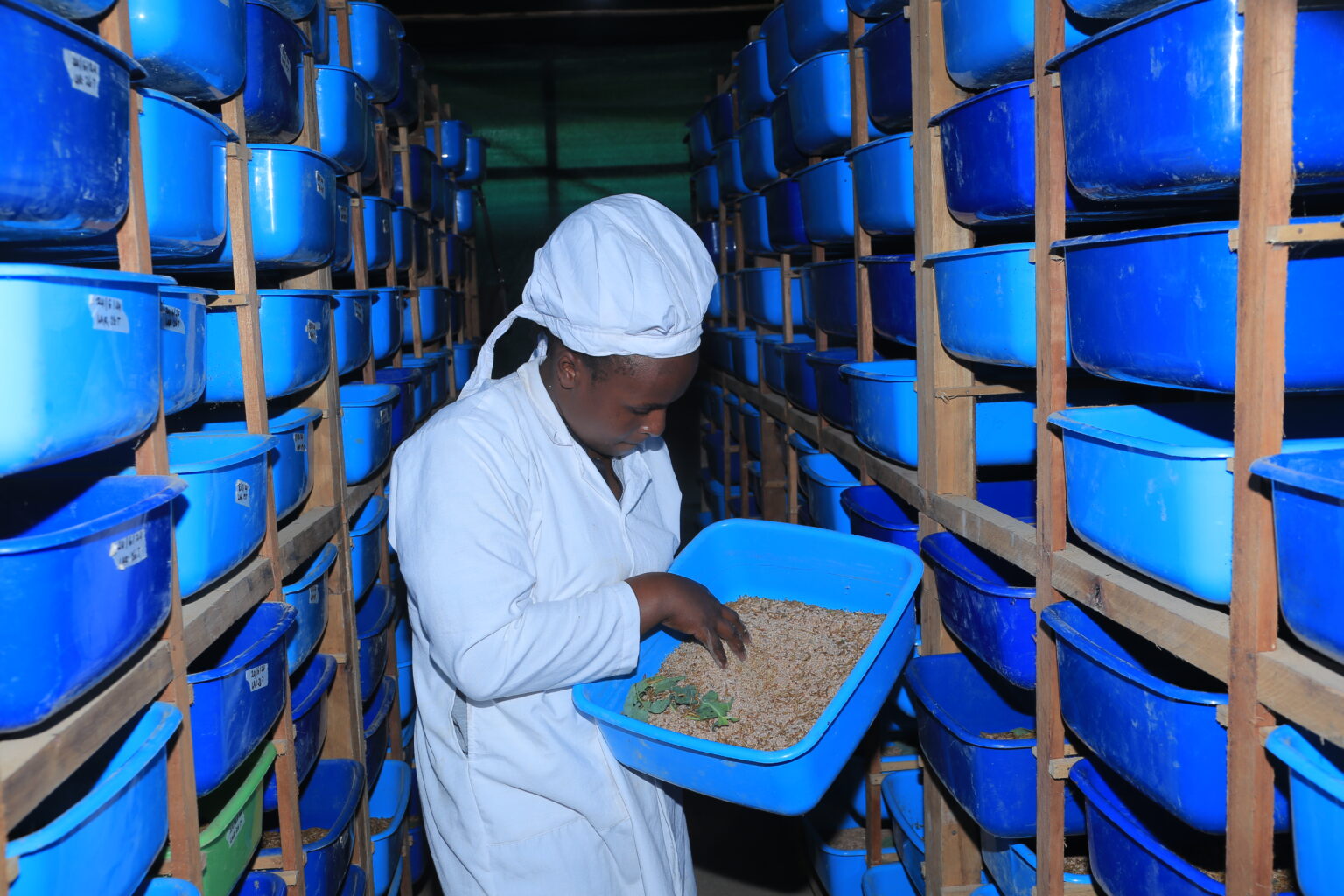
Mealworm for nutrition and health
Refugees, host community members and schools produce mealworm as a local source of protein. In two schools, the project tested what happens when mealworm is added to school meals – the first study of its kind in the world.
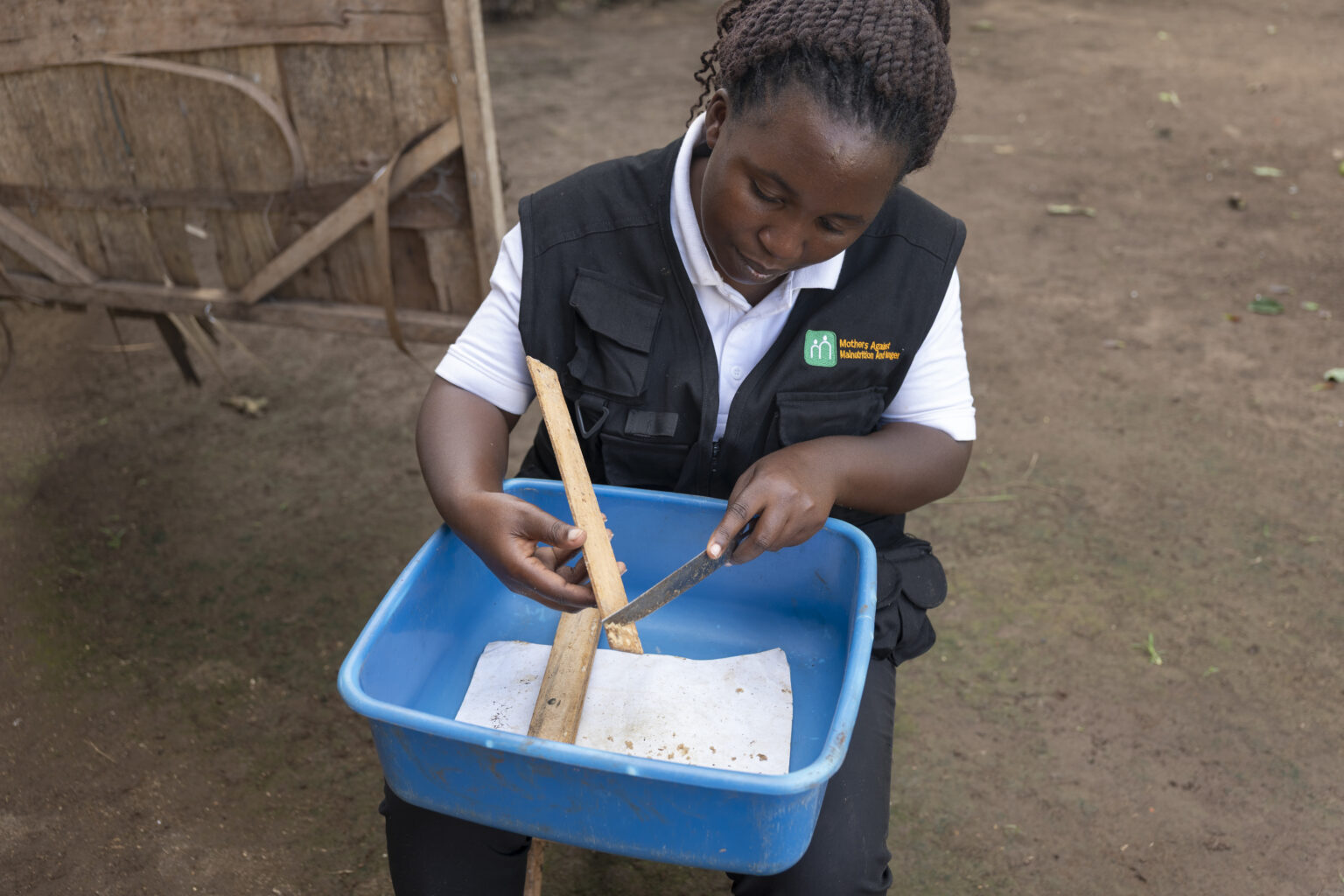
Black soldier fly larvae for income
965 refugees and host community members were trained to produce black soldier fly larvae, which they sell as protein-rich feed for poultry and fish. Local farmers’ associations and authorities were strengthened to support the producers.
How the project developed
2019
First steps
MAMAH and Bobo Eco Farm, supported by RAISE, start introducing edible insects in and around Kyaka II. Bobo Eco Farm sets up Uganda’s first professional mealworm production.
2020
Testing the idea
With funding from CISU (Danida), RAISE and MAMAH test mealworm production in two schools and BSFL production for animal feed, and support local farmers’ associations.
2020–2021
Pilot phase
A 12-month humanitarian grant of DKK 1,000,000 from the Novo Nordisk Foundation expands the work. By the end of 2021, 265 people were trained in BSFL, 200 in mealworm production, and 8 schools ran mealworm clubs.
2022–2026
RefIPro
The Novo Nordisk Foundation awards DKK 15,400,000 for the four-year RefIPro project, bringing in research partners from the University of Copenhagen, Makerere University and ICIPE.
2026
Sharing the lessons
In August 2026, the consortium hosts an international conference in Kampala and launches two practitioner reports on mealworm and BSFL production.
Want to know more?
Read the full lessons learned in our two practitioner reports on mealworm and black soldier fly larvae production.