Mealworm production
Improving the nutrition and health of refugee and host community children by producing mealworm – a local, protein-rich food that needs very little land, water or money. RefIPro was the first project to introduce mealworm production in Uganda.
Why mealworm?
In Uganda’s refugee settlements, a main cause of malnutrition is lack of access to nutritious food. Refugees have too little land to feed themselves and few ways to earn an income, even though they are allowed to work.
In Rwamwanja, the settlement next to Kyaka II, a 2017 survey found that nearly half of young children were stunted, and 20–25% were acutely malnourished.
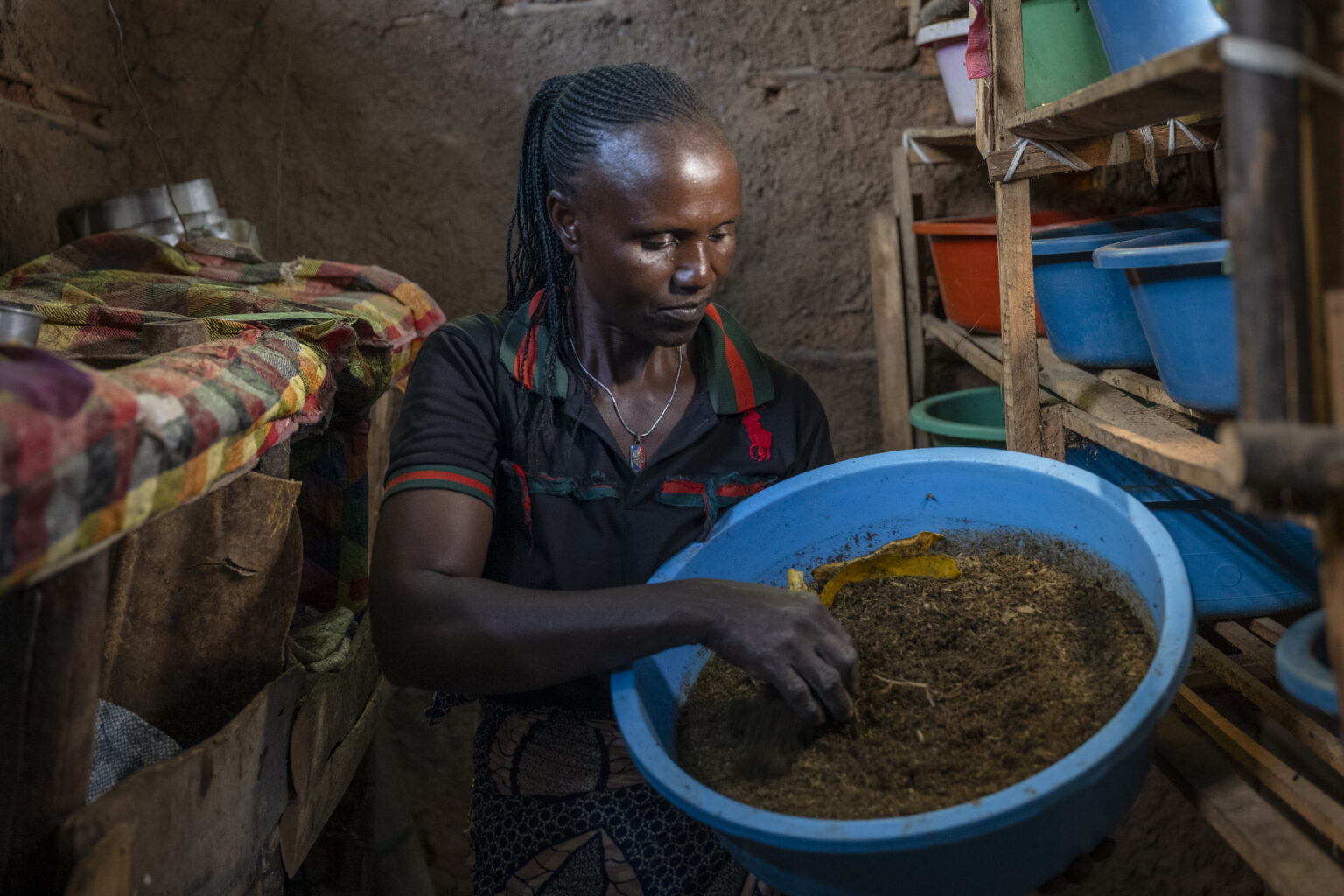
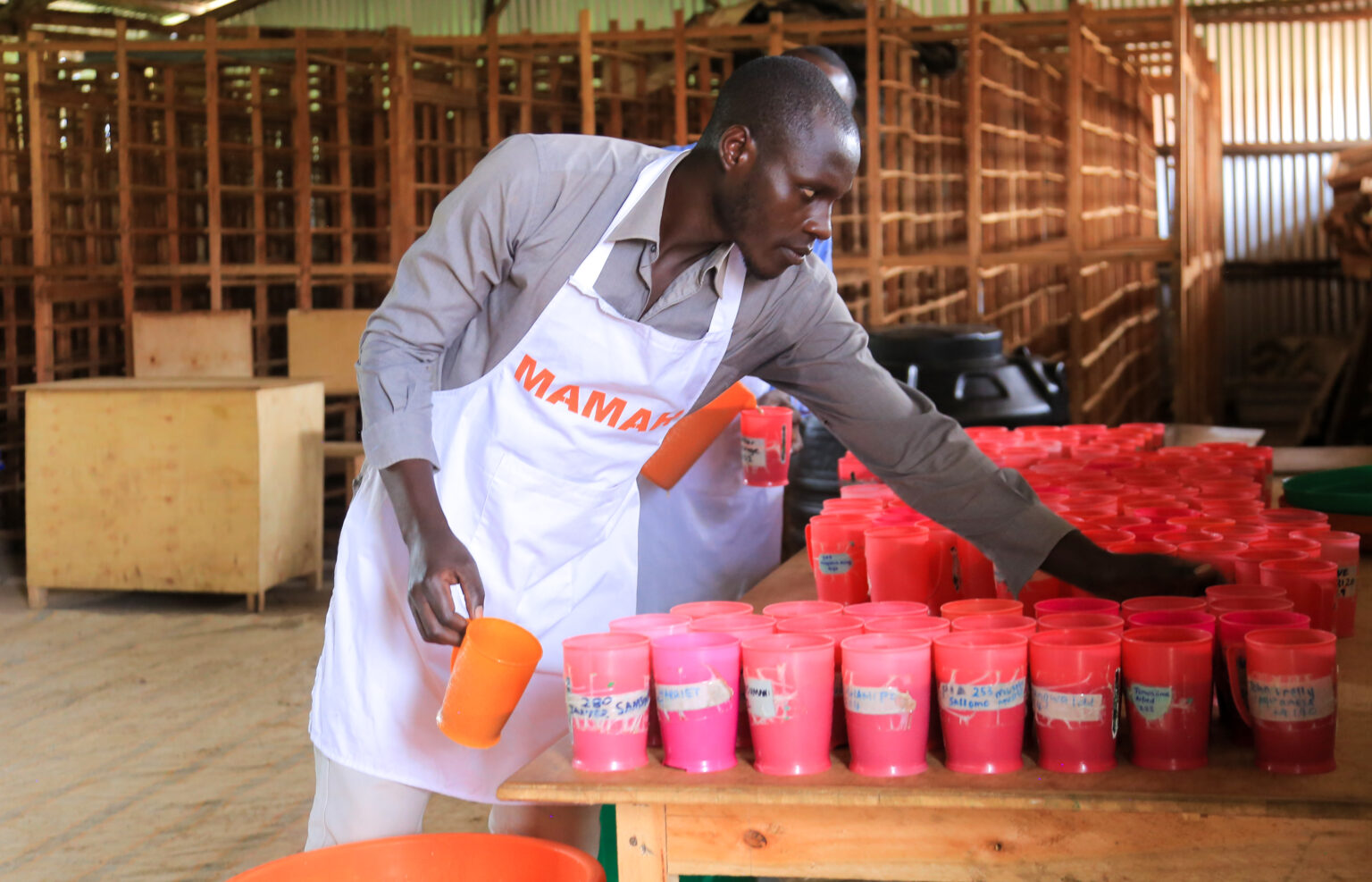
Since 2019, MAMAH and Bobo Eco Farm, supported by RAISE, have introduced mealworm production in households, communities and schools in and around Kyaka II.
What the project set out to achieve
200
refugee and host community members producing mealworm for food and sale
1,000
family members benefiting from the production
10
schools producing mealworm in school science corners
2
research studies: on local feed for mealworm, and on mealworm in school meals
The promise of mealworm
Mealworms are well suited to food production in refugee settlements, where space, water and resources are limited.
Easy to rear
Kept at high densities in stacked trays, mealworms need very little water and can eat the same simple feed, such as wheat or maize bran, at every life stage.
Flexible and robust
They reproduce quickly and tolerate a wide range of temperatures and humidity. Growth can be slowed down or sped up just by changing their diet.
Nutritious and simple to process
Rich in protein, essential amino acids and micronutrients – and they can be prepared by simple roasting, with little equipment or energy.
Turning waste into food
Mealworms can live on farm by-products and food waste, and can even break down toxins in contaminated grain.
A source of income
Surplus production can be sold, giving refugee households an income and more economic independence.
The mealworm life cycle
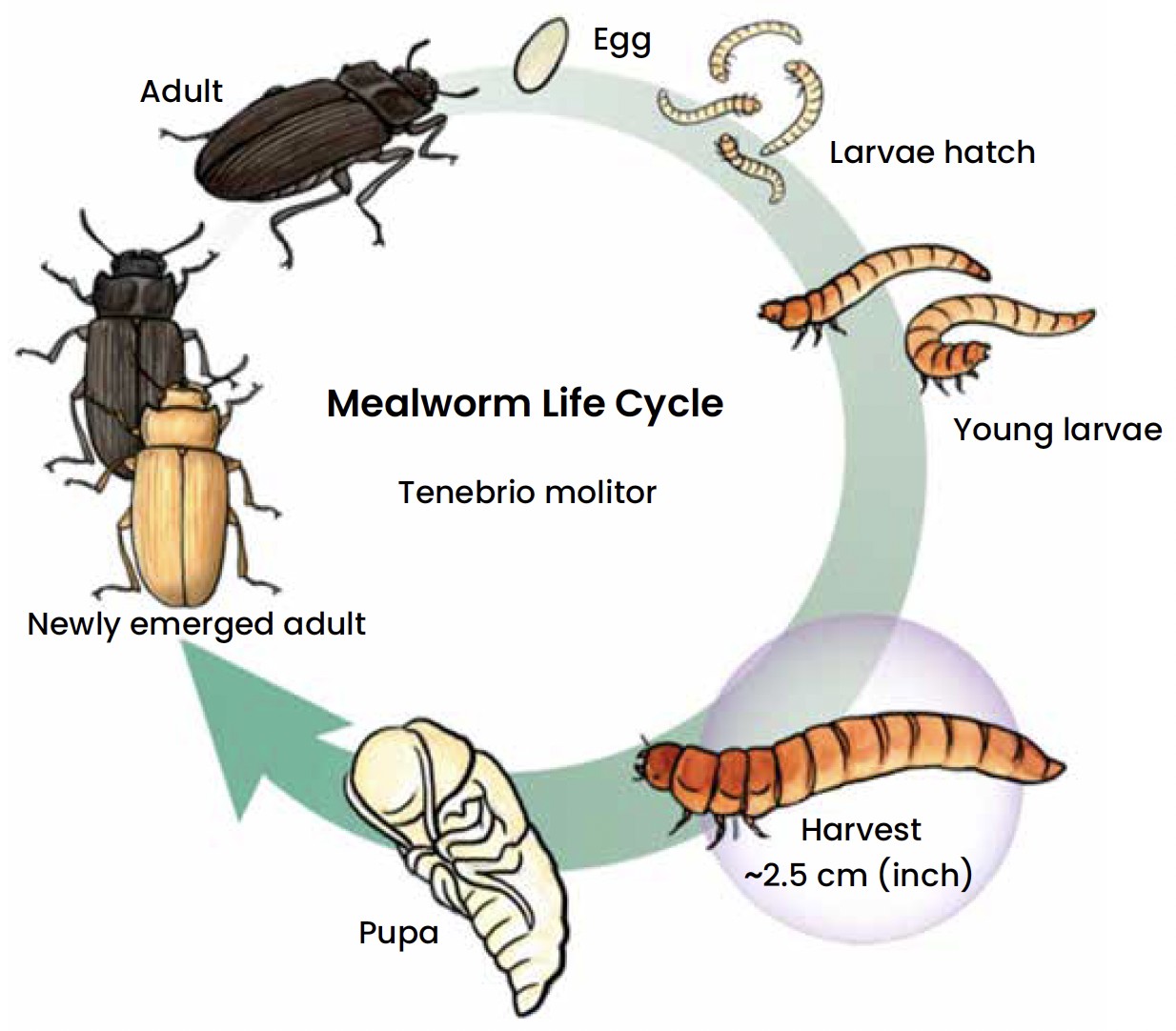
Despite its name, the yellow mealworm (Tenebrio molitor) is not a worm but the larva of the darkling beetle. A full life cycle takes two to four months, depending on temperature, humidity, food and how many insects share the tray.
1
Egg
A female beetle lays 200–500 tiny eggs in grain or bran. At 25–30°C they hatch in four to eight days.
2
Larva
The mealworm itself – the longest stage and the one that matters for production. Larvae grow to 20–30 mm and are harvested as food.
3
Pupa
A resting stage where the insect does not eat while it turns into a beetle. It takes about a week at 25–30°C, longer when it is cooler.
4
Adult beetle
Beetles mate within a few days and live for two to three months, laying eggs throughout.
Keeping the life stages apart
Unlike black soldier fly larvae, mealworms tend to eat each other – especially the pupae. All stages live in the same trays, so farmers must check them regularly and separate the pupae from the larvae. Without good management, a tray can end up feeding pests instead of producing food.
Four ways to produce mealworm
Mealworms can be produced in several ways in a refugee settlement. Each model has its own strengths and weaknesses – and whatever the model, success depends on whether the returns are worth the cost of feed, materials, space and labour.
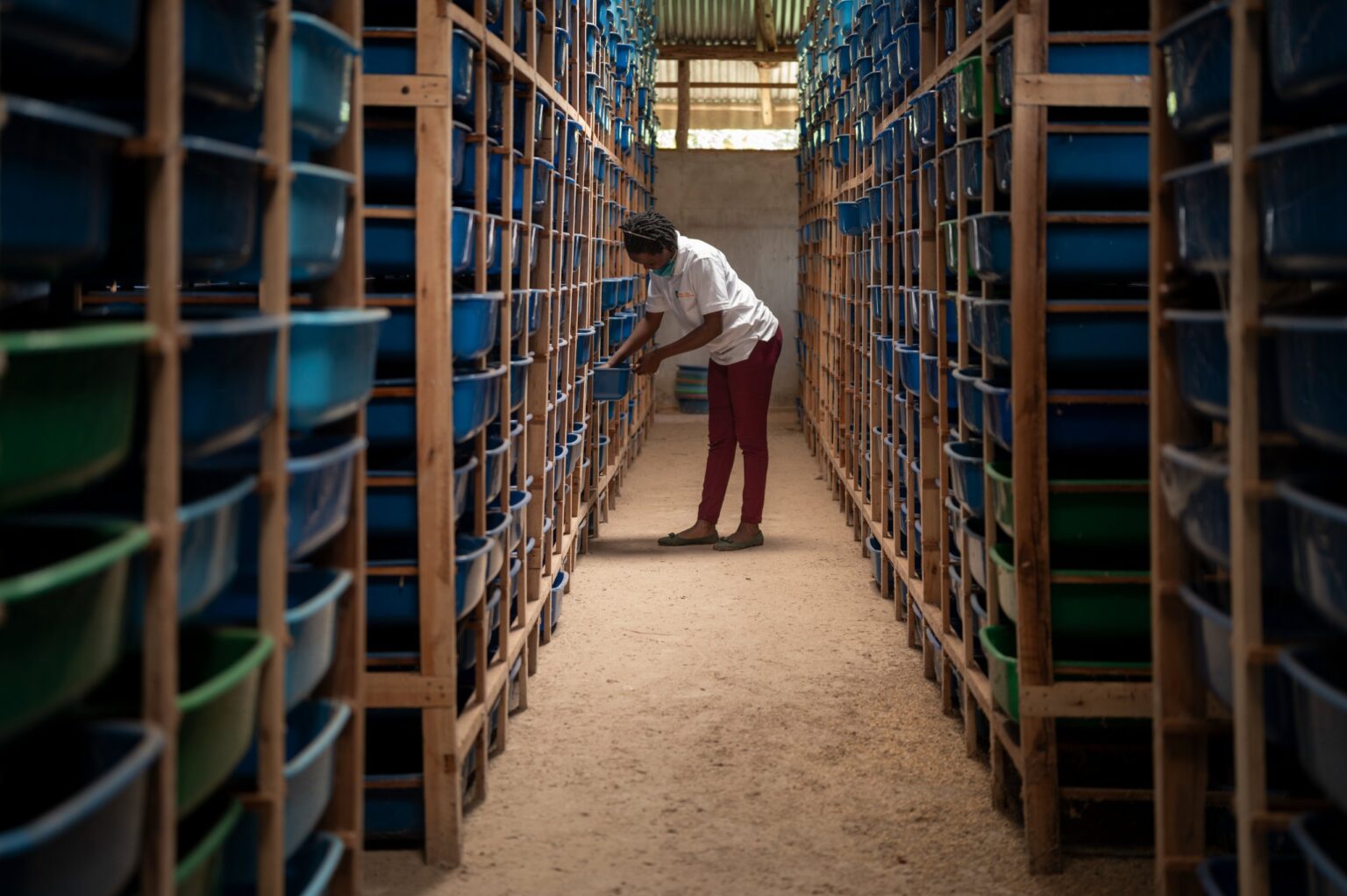
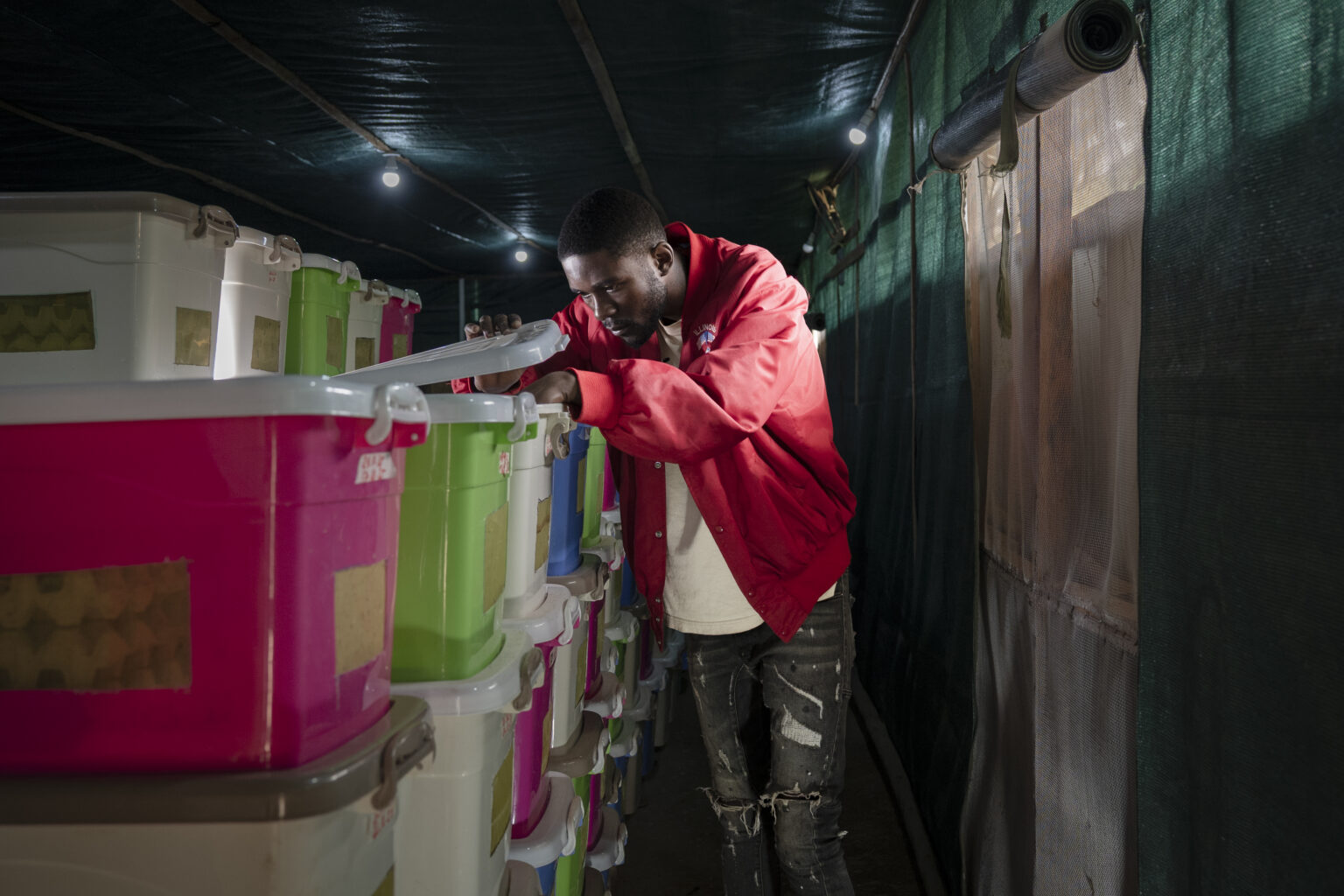
Centralised production
A large central facility produces at a lower cost per unit, gathers expertise in one place and makes pest control easier.
Main challenge: Needs a large upfront investment and skilled staff – and disease can spread fast and wipe out the whole colony.
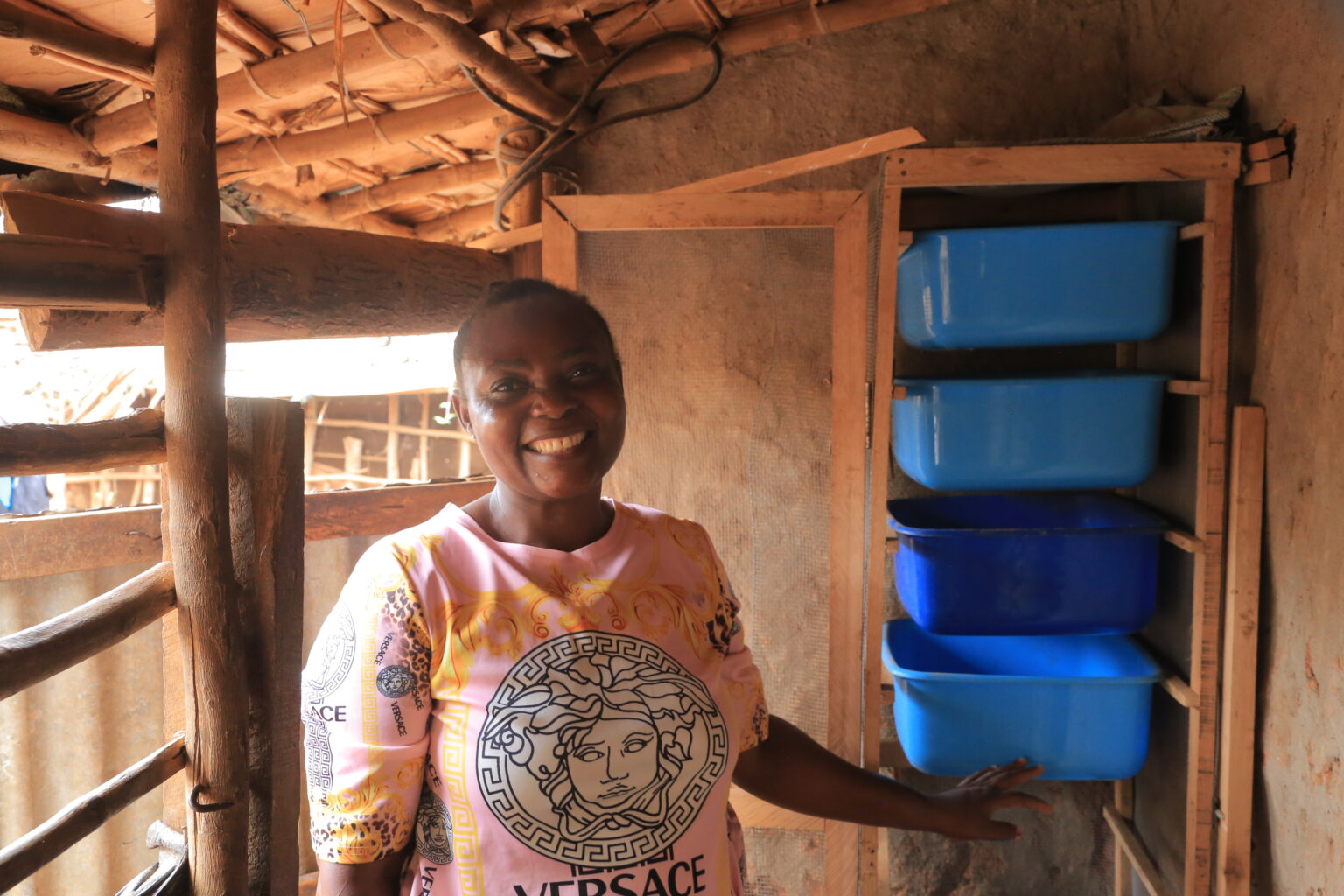
Household production
A community breeding centre gives families training, advice and starter stock. They then produce at home in basins, buckets and trays – mainly to feed their children. The practice has spread from neighbour to neighbour, and a small market has started to grow.
Main challenge: Breeding takes skill, so newer farmers still depend on the centre for young larvae and follow-up support.
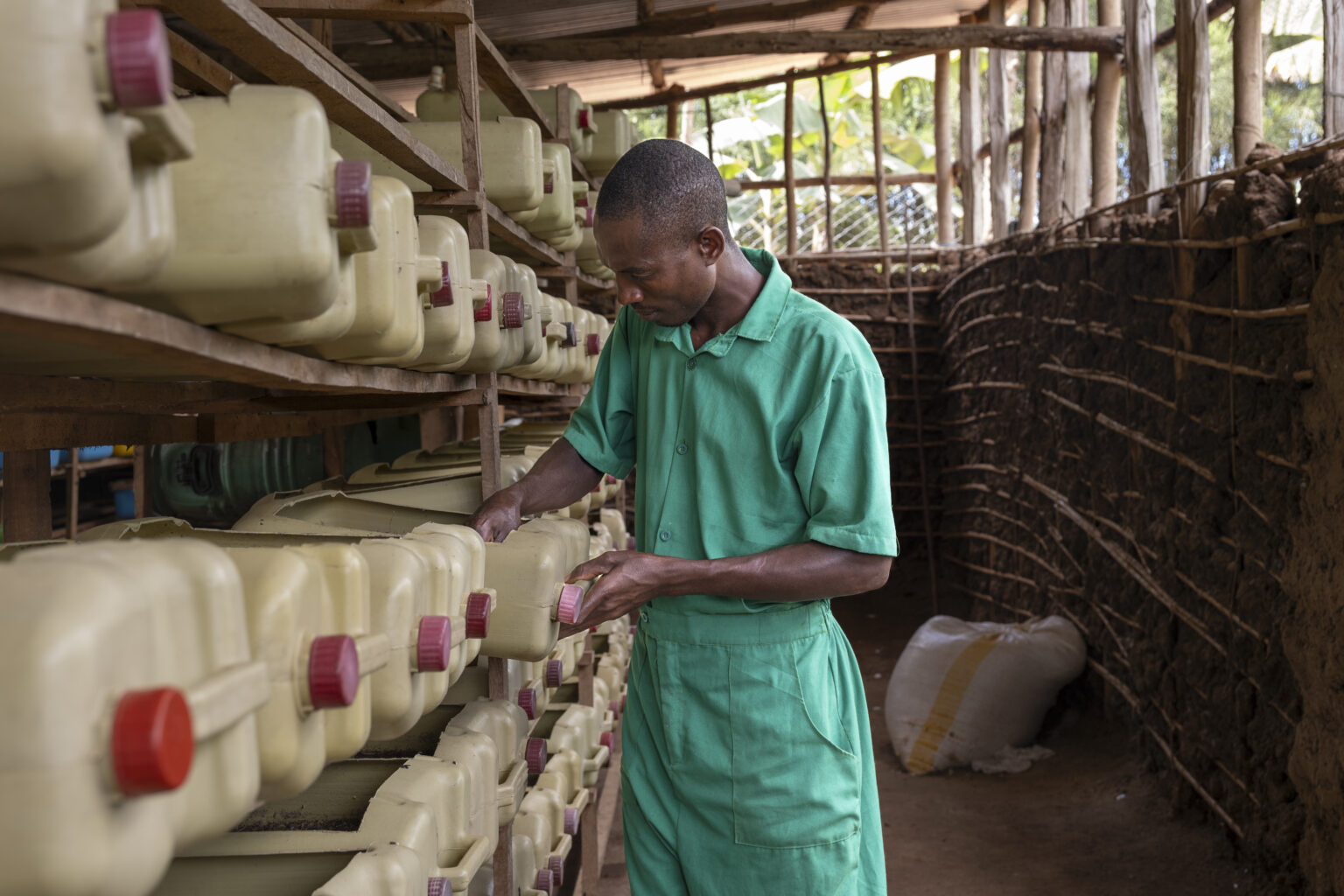
Hub-and-spokes model
A central facility run by a company or cooperative handles the demanding stages – pupae, beetles and eggs. Households receive young larvae and grow them to harvest size on farm by-products or food waste.
Main challenge: Larvae must be transported regularly, which costs money and can harm them. Works best in densely populated areas like refugee settlements.
School-based production
Schools produce mealworm to enrich school meals and give students hands-on science lessons. At Bukere Primary School in Kyaka II, a parent from the refugee community runs the facility, and students help sort pupae and study the life cycle.
Main challenge: Feed costs money – the school is discussing small contributions from parents.
The models can also be combined: a community centre can train farmers, demonstrate production and supply larvae to households, while the most skilled farmers learn to manage the whole life cycle and train others.
Building a business case
Mealworm production must make economic sense. Its cost should be compared with other local protein sources such as eggs, milk and poultry – and the value of the frass (insect manure) as fertiliser, often overlooked, can be what makes it pay off.
What costs the most depends on the model
Large-scale facilities
Labour is the biggest cost – mainly removing pupae by hand – followed by dry feed such as wheat or maize bran.
Community facilities
Volunteers keep labour costs down, but at least one paid part-time assistant is usually needed. Buying and transporting feed is the main cost.
Households
Usually no labour costs, and families can use their own food waste. Some bran is still needed and is likely the main expense.
Introducing mealworm farming where it is unknown takes time. It needs several years of support and a lot of trial and error before production can sustain itself – it is not a short-term project.
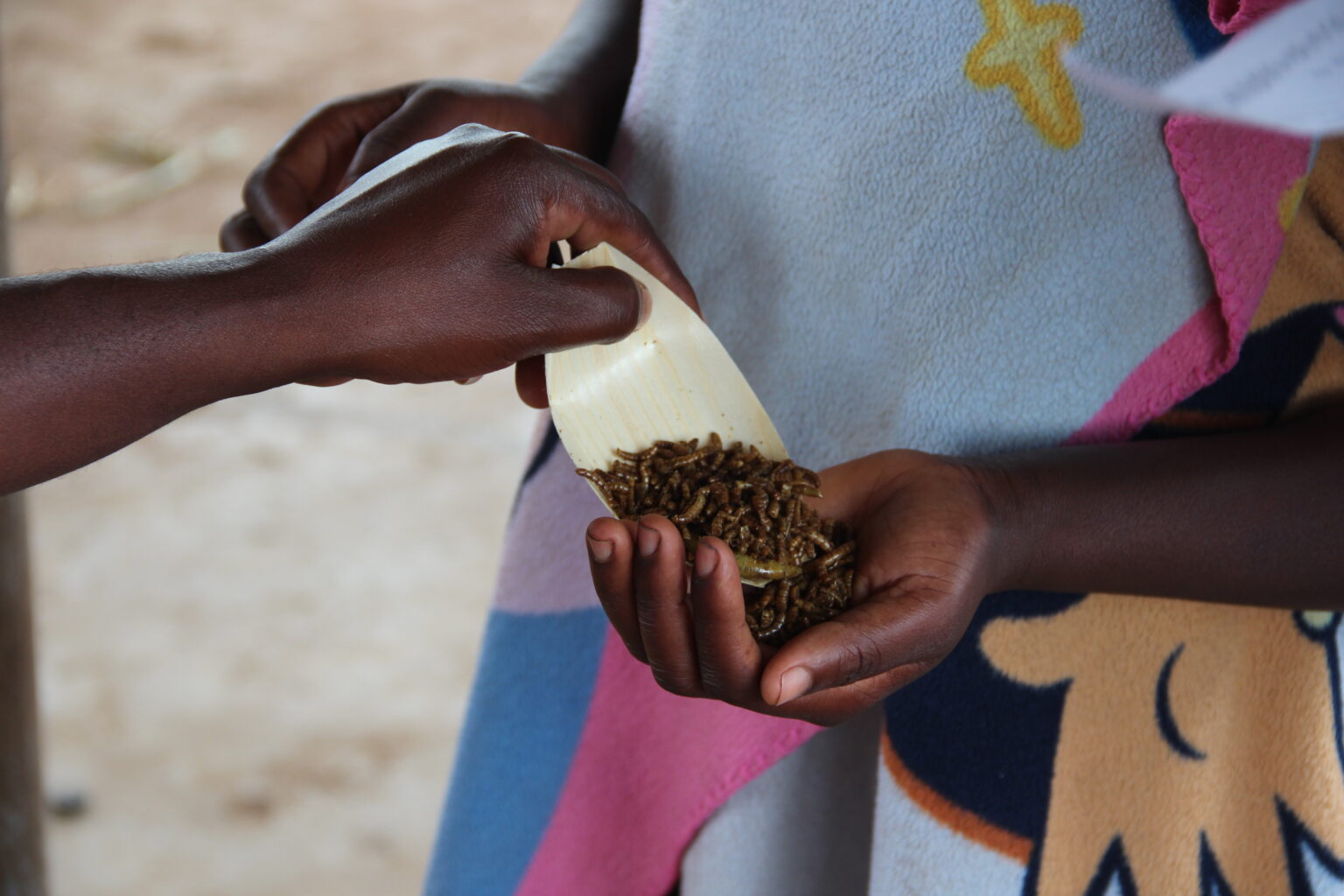
From tray to table
Mealworms can be roasted and eaten as a crunchy snack, or milled into flour and added to familiar foods such as porridge.
Harvest. Remove feed, frass and other material from the larvae.
Fast for 24 hours. Empties the gut, reduces microbes and prevents off-flavours.
Wash and roast. Pan-roast until brittle – or dry in an oven or the sun.
Mill into flour. Mealworm powder keeps longer and can be mixed into flour for porridge, soups and snacks.
A storage study by Makerere University found that mealworm-enriched flour stayed safe and stable for at least six months.
The school feeding trial
Can adding mealworm to school porridge help children grow and stay healthy? RefIPro tested it in two schools in and around Kyaka II – the first study of its kind in the world.
Want to know more?
Read the full lessons learned in our practitioner report on mealworm production – from feed and processing to nutrition and frass fertiliser.