Black soldier fly larvae
Improving the incomes of refugees and host community members by turning organic waste into high-protein feed for poultry, pigs and fish.
Why black soldier fly larvae?
In Kyaka II, plots are getting smaller as more refugees arrive, and jobs are scarce. Many families cannot grow enough food or earn a steady income – and food rations have been cut.
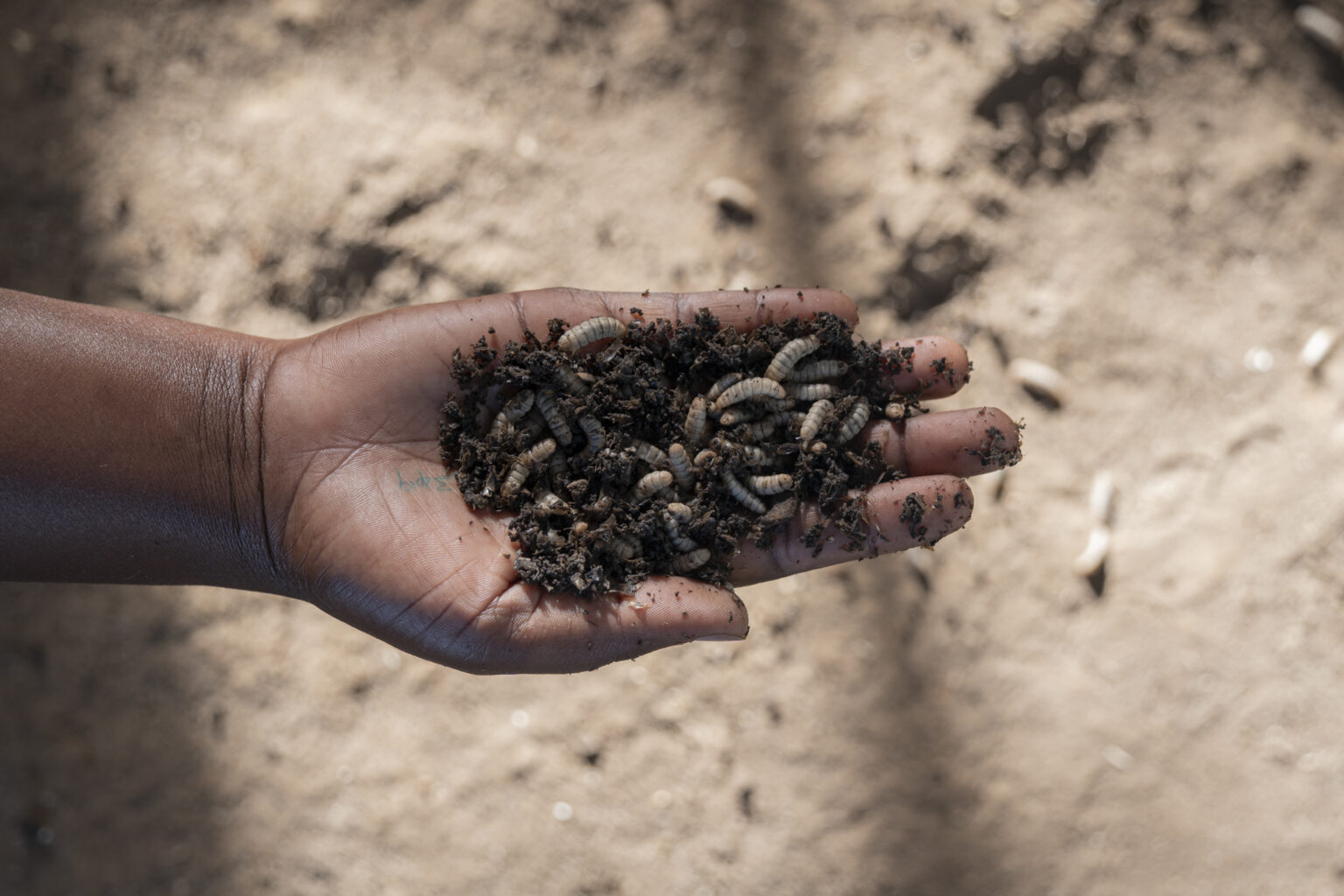
Black soldier fly larvae need very little land, water and money to get started. They turn market and household waste into protein-rich feed that farmers can sell or give to their own chickens, pigs and fish. What is left over becomes fertiliser for vegetables.
What the project set out to achieve
965
refugee and host community members trained to produce BSFL for sale as feed
30
farmers associations supporting BSFL producers in and around Kyaka II and Mityana
2
insect farmers’ cooperatives bringing the groups together
3
research areas: local feed for the larvae, insect feed for poultry and fish, and frass as fertiliser
The promise of black soldier fly larvae
Black soldier fly larvae can help refugee households in several ways at once – and make the local economy more circular.
Cheaper feed
Commercial feed is expensive and of uncertain quality. Larvae give poultry, pig and fish farmers a local, affordable source of protein.
A source of income
Selling larvae – or animals raised on them – brings in regular cash. Many farmers used the income to pay school fees.
Fertiliser for vegetables
The frass left after harvest is a valuable organic fertiliser for vegetable gardens and maize.
Managing waste
The larvae eat market and household waste. This gives organic waste a value and helps districts with limited waste services.
Better for the planet
A local alternative to soy and fishmeal in animal feed – two protein sources linked to deforestation and overfishing.
The black soldier fly life cycle
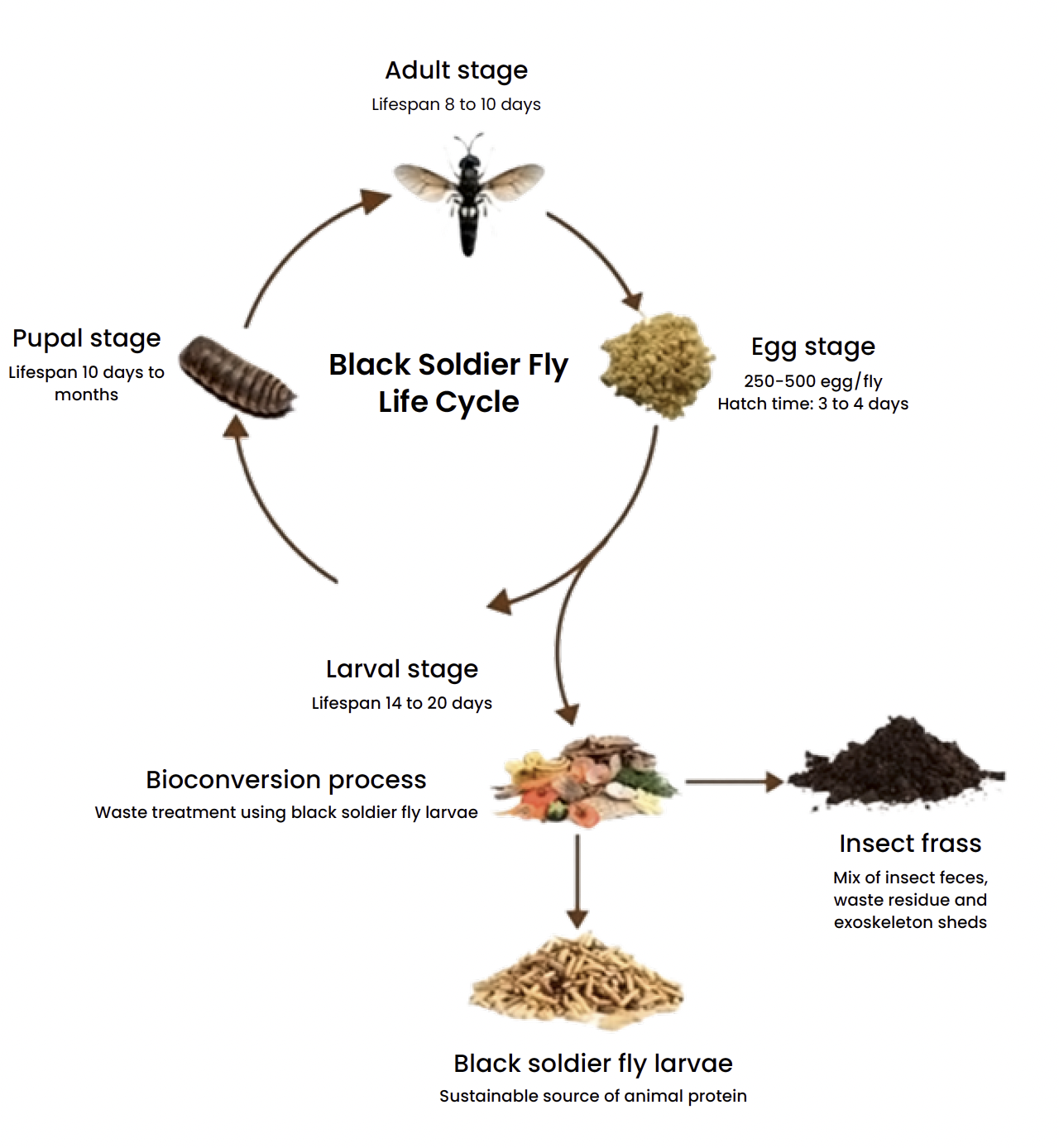
The black soldier fly (Hermetia illucens) is a harmless insect. It goes through four stages: egg, larva, pupa and adult fly. The larvae are voracious eaters and turn organic waste into protein and fat in about two weeks.
1
Egg
Each female lays 250–500 eggs in small cracks close to rotting material. The eggs hatch in three to four days.
2
Larva
The stage that matters for production. Young larvae start on soft feed such as chicken mash, then eat organic waste and are harvested after 10–14 days.
3
Pupa
The larvae stop eating and turn dark brown. Some are kept as breeding stock. This stage lasts from ten days to several months.
4
Adult fly
The flies live 8–10 days in netted “love cages”. They do not eat, mate within three days and need light, warmth (27–32°C) and humidity.
Breeding is the hardest part
Keeping adult flies and producing enough eggs takes more skill and equipment than raising larvae. In RefIPro, trained lead farmers therefore ran the egg production in community breeding centres, and farmers received five-day-old larvae to raise.
How production was organised
Most farmers produce at home, but the project also built shared structures that make it easier to get started and to grow.
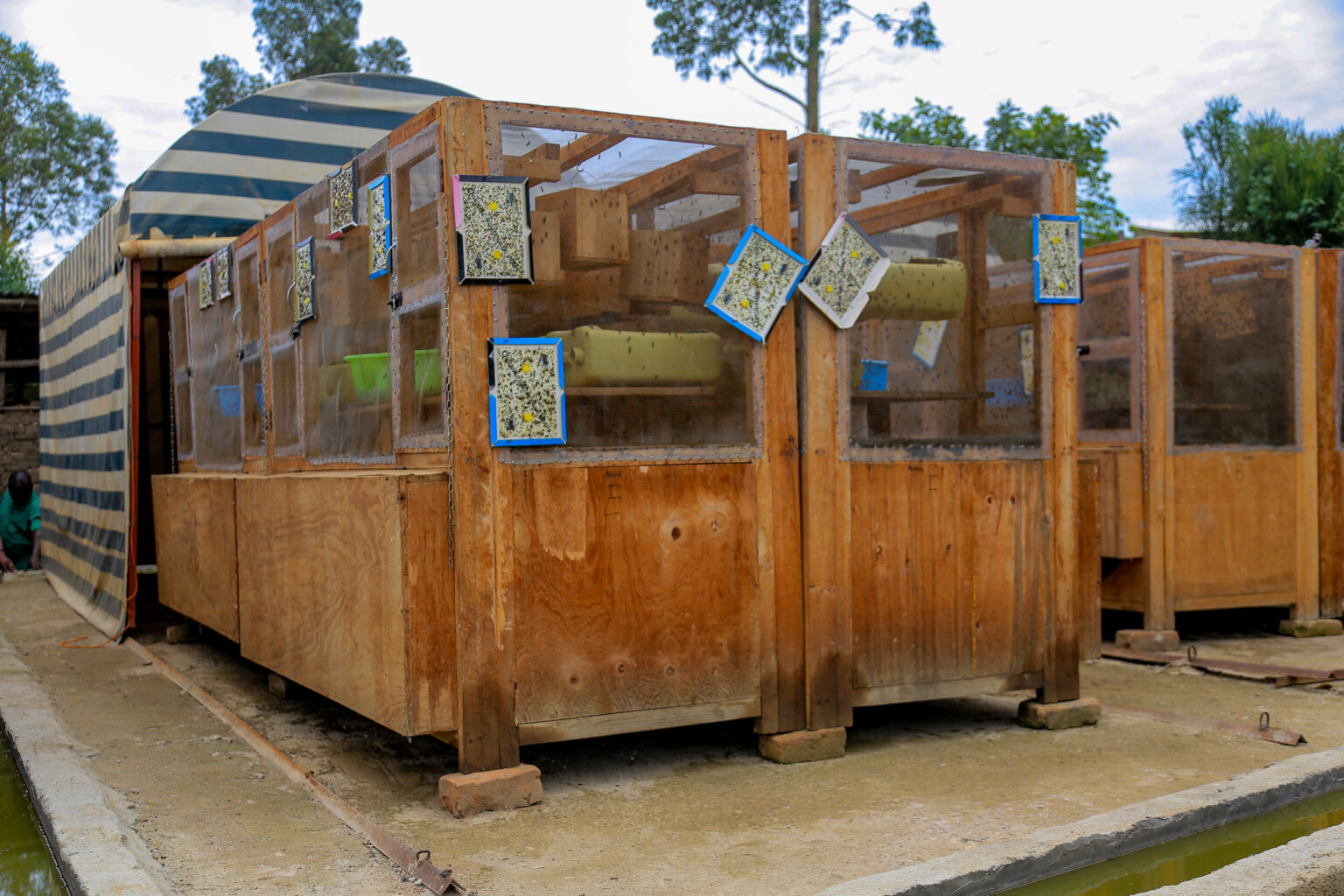
Community breeding centres
Trained lead farmers keep the adult flies, produce eggs and hand out five-day-old larvae. This lets most farmers focus on the simpler rearing stage.
Main challenge: Demand for eggs and young larvae often exceeded supply.
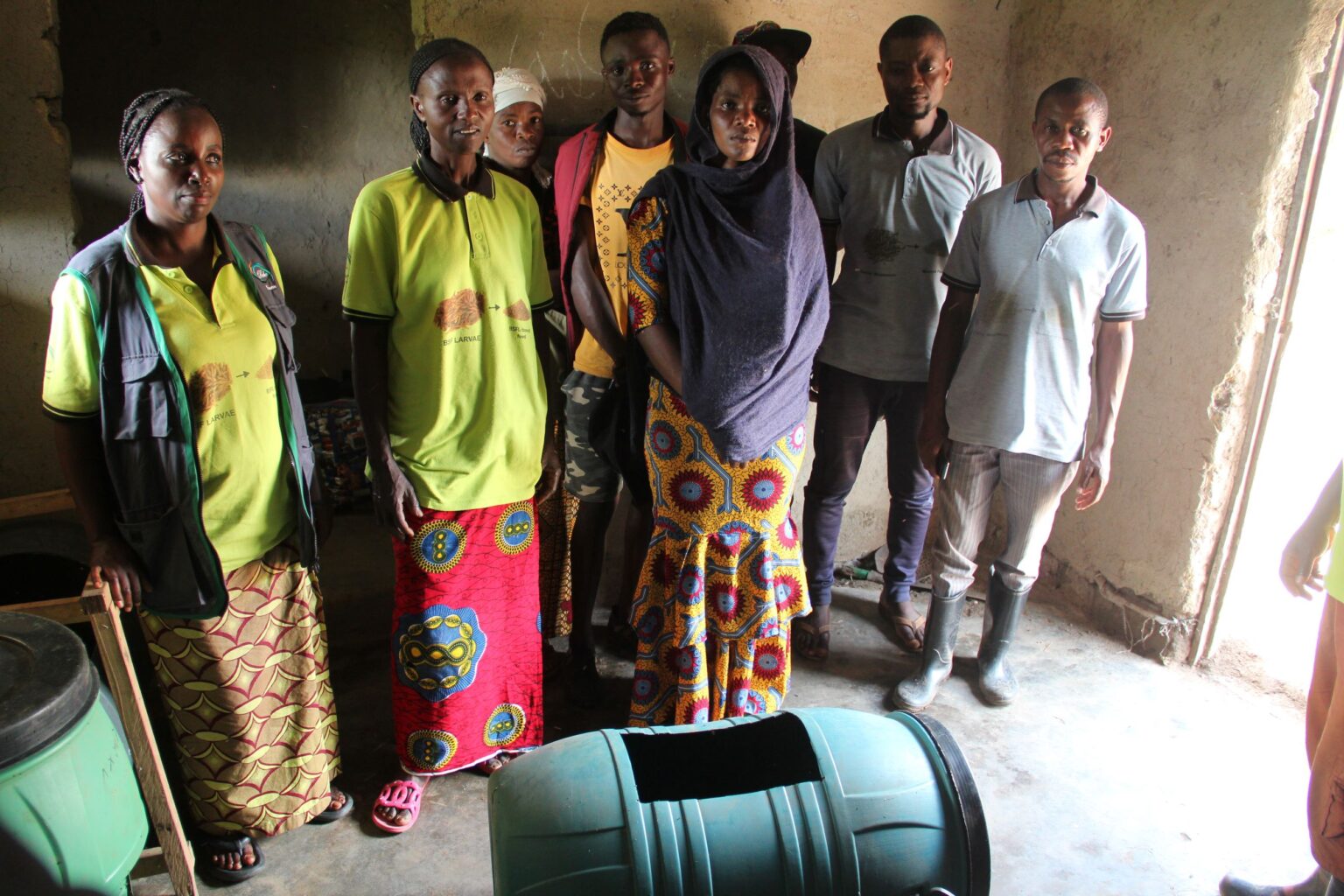
Household production
Families raise larvae in basins, buckets and jerrycans in their compound, using waste from homes and markets. It is cheap to start and easy to expand step by step.
Main challenge: Food is scarce in the settlement, so there is little household waste to feed the larvae.
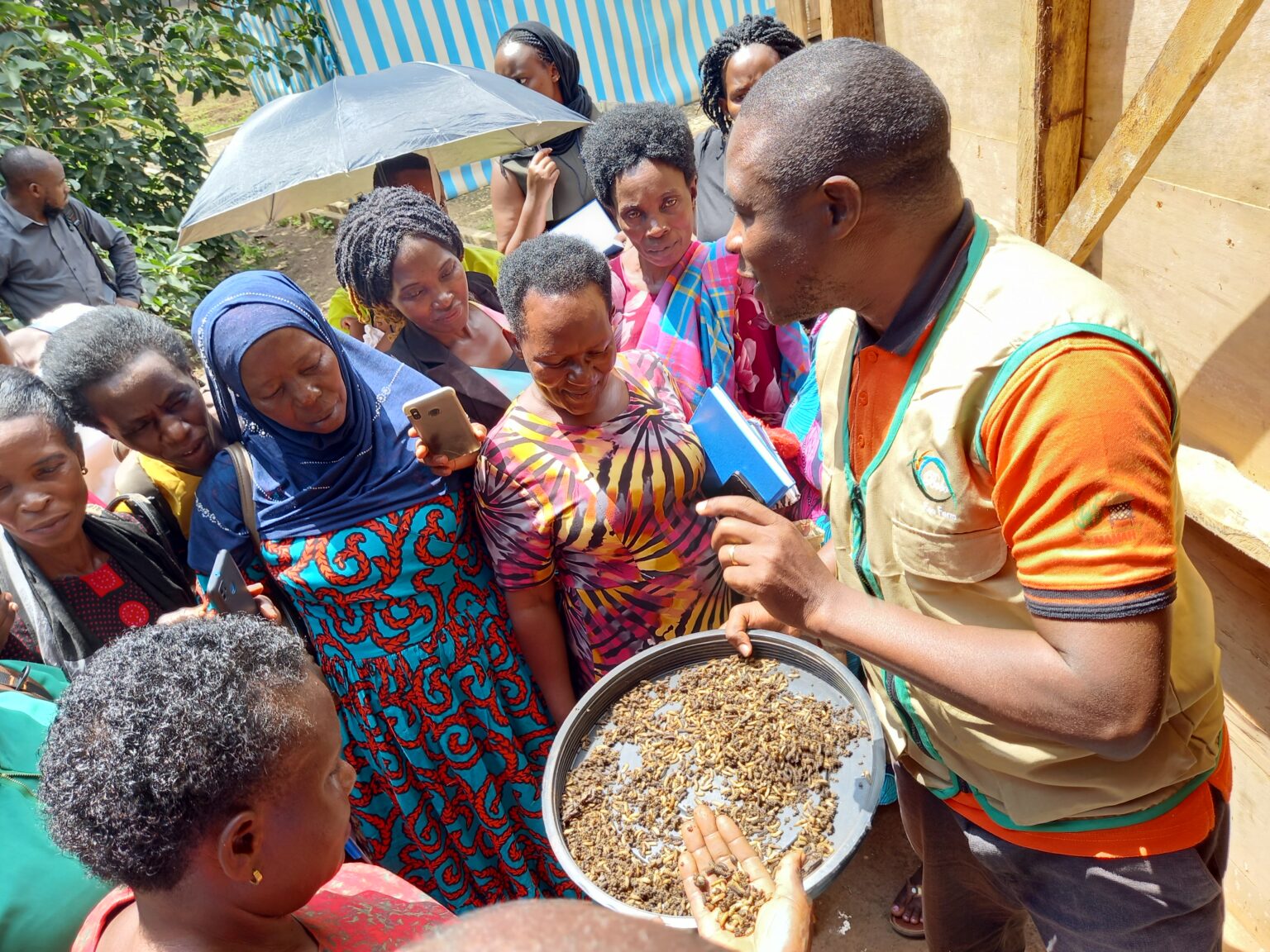
Farmer groups
Groups share rearing facilities and produce larger volumes. Some feed the larvae to their own chickens or fish, others sell them and share the profit.
Main challenge: Collecting, sorting and transporting market waste takes time and money.
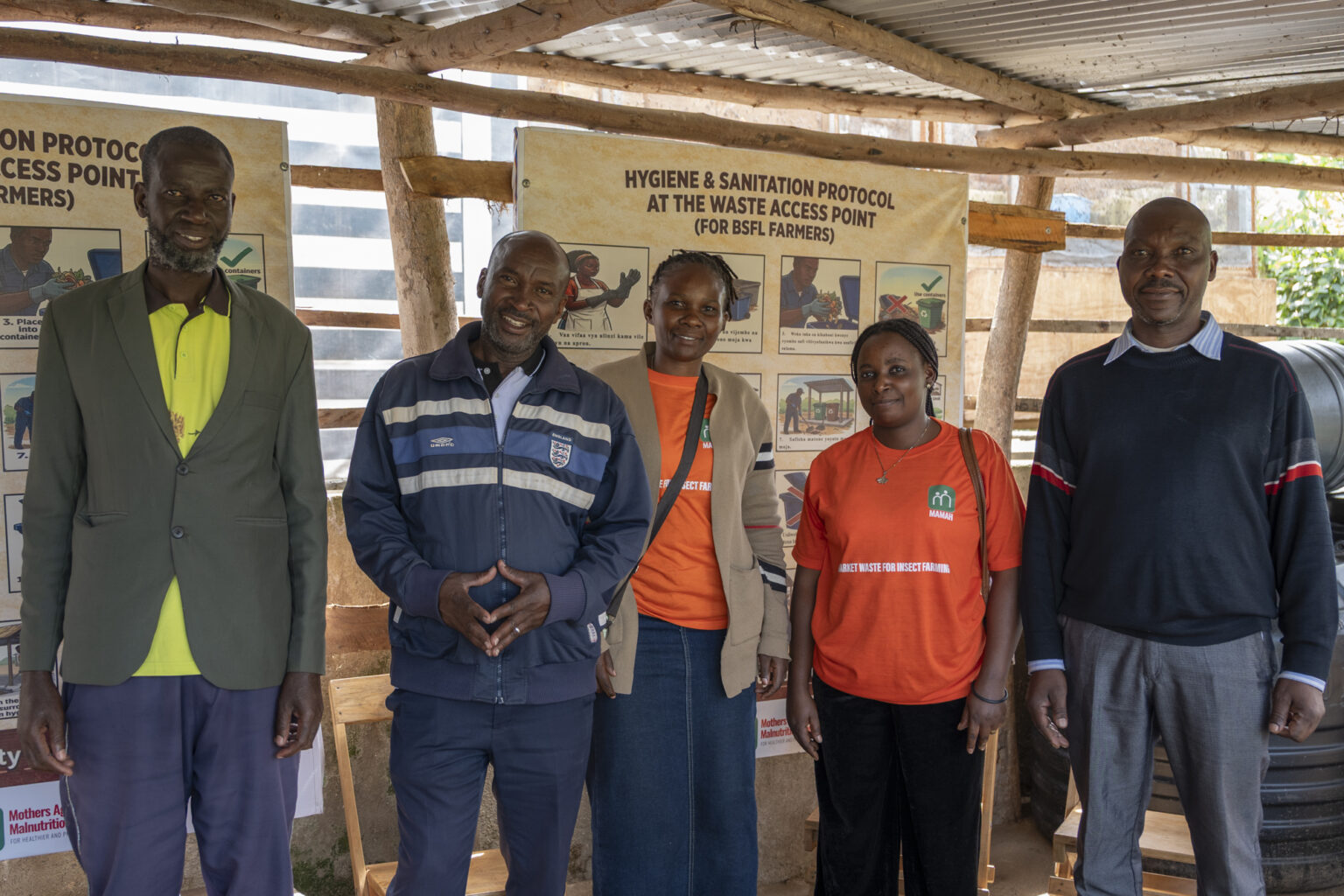
The insect farmers’ cooperatives
Two cooperatives act as umbrellas for the groups. They organise waste collection, inputs, technical support and sales – and give farmers a stronger voice.
Main challenge: Access to credit and to larger markets is still limited.
Training that works: Training was short and hands-on – two days of practical demonstrations with little theory. Regular follow-up visits and experienced “champion farmers” kept farmers going through the first production cycles.
Three barriers to growth
The project showed that BSFL production works in a refugee settlement. But three things still hold farmers back.
Too few eggs
Breeding needs more skill and equipment than rearing. When young larvae ran short, some farmers gave up. More lead farmers and groups are now learning to breed.
Not enough feed
There is little waste in the settlement, and transport is costly. Organised collection from markets has helped, and talks with the districts aim at sorting waste at source.
Limited credit
Refugees rarely get loans. Savings and credit groups in the cooperatives help farmers expand step by step.
Start by finding a good source of organic waste close to the farmers. Without enough feed, production cannot grow.
Building a business case
Feed is the biggest cost for livestock farmers in Uganda – 60–80% of production costs – and protein is the most expensive part. Locally produced larvae can replace part of the soy and fishmeal, and demand is growing: some poultry farmers now travel from neighbouring districts to buy larvae in Kyaka II.
What the larvae are worth
150 kg a month
Average production of each of the 25 farmers associations (fresh larvae).
UGX 450,000 per group
Monthly market value of a group’s larvae at UGX 3,000 per kilo – about USD 120.
UGX 22,500 per person
About USD 6 a month per member. With enough eggs, feed and kits, groups could produce two to three times as much – up to UGX 67,500 per person.
BSFL is worth most to farmers who already keep chickens, pigs or fish. They can feed the larvae to their own animals and sell those at a higher profit – so new initiatives should target them first.
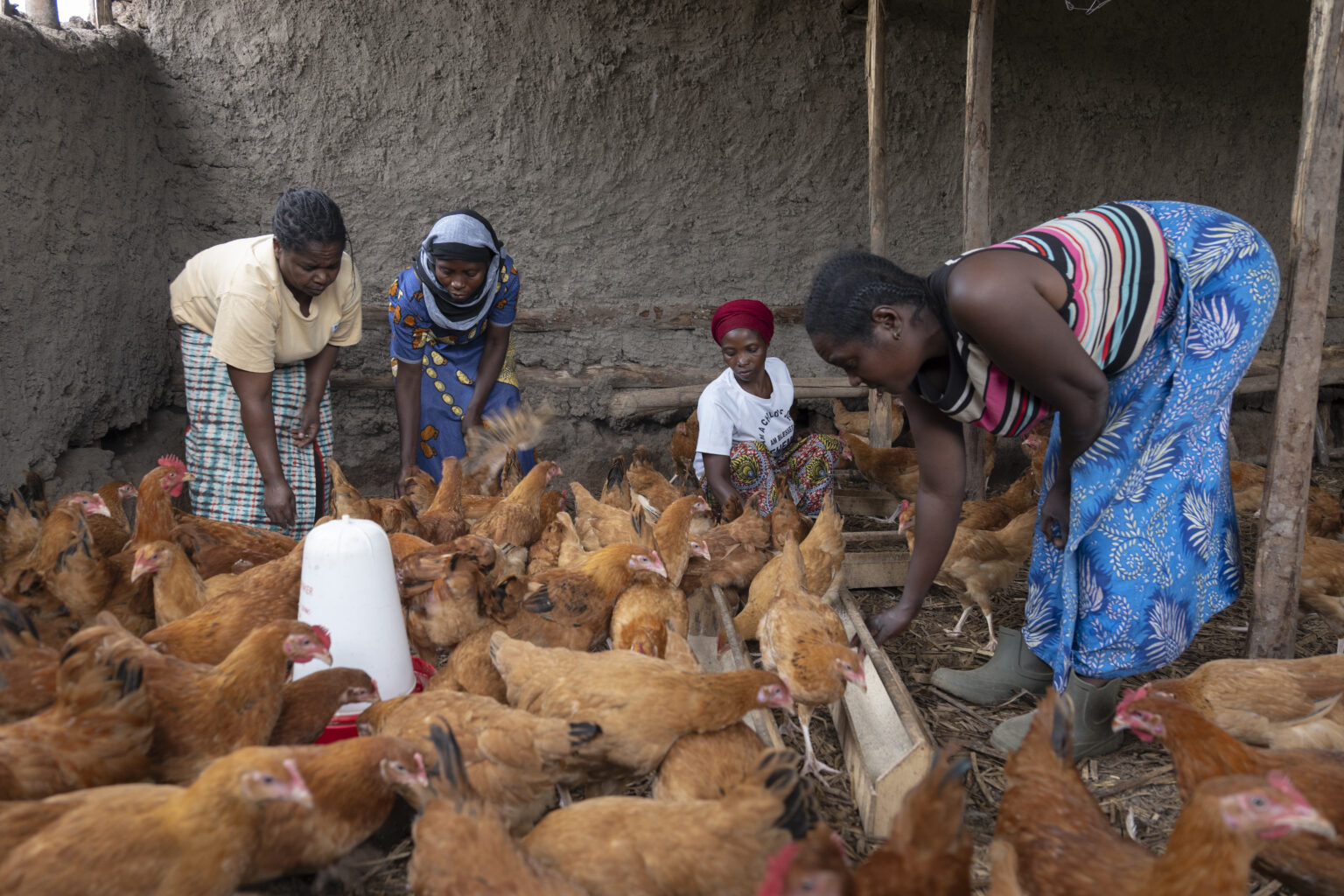
From waste to feed
Most farmers use the larvae in two ways: they sell part of the harvest and feed the rest to their own animals.
Collect waste. Sorted market and household waste, often mixed with cow dung or maize bran.
Rear the larvae. Five-day-old larvae eat the waste in shaded containers for about two weeks.
Harvest and dry. Sieve the larvae from the frass. Sun-dried larvae keep longer and are easier to sell.
Feed or sell. Fresh or dried larvae go to chickens, pigs and fish – at home or to neighbouring farmers.
Farmers report that chickens grow faster and lay more eggs, and that fish grow well at lower feed costs. The frass is composted for five weeks and used as fertiliser for vegetables. One farmer group in Kakoni has started making a protein concentrate to sell as a feed ingredient.
What the research found
Researchers from icipe tested which local feeds give the most larvae, and how well frass works as fertiliser for vegetables. See the results on our results page.
Want to know more?
Read the full lessons learned in our practitioner report on black soldier fly larvae – from setting up production and finding feed to the business case.